Thou hast magnified thy word above all thy name.
-Psalm 138:2, KJV
Download Bible Study Software

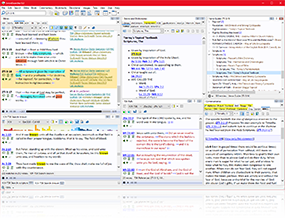
For a complete Scripture study system, try SwordSearcher Bible Software, which includes the unabridged version of this dictionary. Once you experience the swiftness and ease-of-use SwordSearcher gives you right on your own computer, combined with the most powerful search features available, you will never want to use the web to do online study again. Includes tens of thousands of topical, encyclopedic, and commentary entries all linked to verses, fully searchable by topic or verse reference.

Also try Daily Bible and Prayer to design your own Bible reading programs and track your prayer list.

KJV Dictionary / C / could

KJV Dictionary Definition: could

could

COULD, pron. COOD. The past tense of can, according to our customary arrangement in grammar; but in reality a distinct word, can having no past tense. Could, we receive through the Celtic dialects.

1. Had sufficient strength or physical power. A sick man could not lift his hand. Isaac was old and could not see. Alexander could easily conquer the effeminate Asiatics.

2. Had adequate means or instruments. The men could defray their own expenses. The country was exhausted and could not support the war.

3. Had adequate moral power. We heard the story, but could not believe it. Th intemperate man could have restrained his appetite for strong drink. He could have refrained, if we would.

My mind could not be towards this people. Jeremiah 15.

4. Had power or capacity b the laws of its nature. The tree could not grow for want of water.

5. Had competent legal power; had right, or had the requisite qualifications. Formerly, a citizen could not vote for officers of government without the possession of some property. AB could not be elected to the office of senator, for want of estate. BC, not being the blood of the ancestor, could not inherit his estate.

6. Had sufficient capacity. The world could not contain the books. John 21.

7. Was capable or susceptible, by its nature or constitution, as of some change. He found a substance that could not be fused.

8. Had adequate strength or fortitude; as, he could not endure the pain or the reproach.

9. Had motives sufficient to overcome objections. He thought at first he could not comply with the request; but after consideration he determined to comply.

10. Had competent knowledge or skill. He could solve the most difficult problems.
Definitions from Webster's American Dictionary of the English Language, 1828.
Previous word: couch. Next word: coulter.
Sign up for the AV1611.Com Newsletter
Must-Read Articles

Westcott & Hort
Magic Marker Binge

Would you do this to the Bible?

The Preeminence of Christ and Bible Translation

1st John 5:7: The best proof of the Trinity you might not have read!

Disarming the Saints: The Bible as Defective Weaponry

Most Recent Articles
Other Resources

Bible Study Software

Believing Study Blog

Learn more about Bible versions
This Site
Other Resources

Home & Intoduction
Articles
FAQ
Books
Verse Charts

Contact

Search

KJV Bible Dictionary
Online Text of the Bible
AV1611 Forum Archives

About Salvation
Freedom: God's Plan For Your Salvation

Believing Study (Editor's Blog)
VerseClick
Bible Software
Bible Verses by Topic
Nave's Topical Bible
International Standard Bible Encyclopedia
Links

"Seek ye out of the book of the Lord, and read" —Isaiah 34:16, KJV

The Fundamental Top 500

Website ©2012 AV1611.COM's webmaster. Various texts copyrighted by their authors.
Please feel free to link to pages on this site, but do not copy articles without authors' permission.